Approach to Sustainability
Committed to eco-friendly packaging solutions that reduce waste and protect the planet.
At LPI, sustainability isn't just a goal; it's a fundamental principle that guides everything we do.
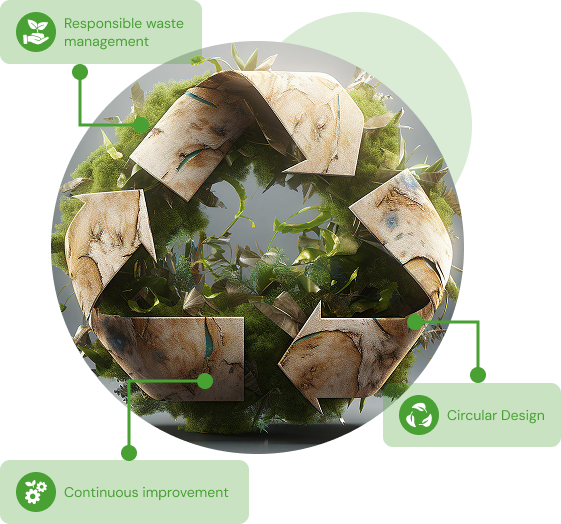
We are committed to minimizing our environmental footprint and maximizing our positive impact on the planet. Our sustainability approach encompasses three key pillars:
Responsible Waste Management
We have implemented a rigorous waste management process to ensure that every piece of waste generated at our facilities is handled responsibly. Our strict protocols ensure that plastic waste is segregated, collected, and transferred to certified partners for proper disposal. We collaborate with companies that specialize in converting plastic waste into energy, thereby diverting waste from landfills and reducing our carbon footprint.
Circular Design
We believe in designing packaging solutions that contribute to circular economies. From the initial concept to the final product, we prioritize materials that are recyclable, reusable, and made from renewable sources. By adopting a circular design approach, we aim to minimize waste and promote the continual use of resources.
Continuous Improvement
Sustainability is an ongoing journey, and we are committed to continuously improving our practices and processes. Through regular monitoring, assessment, and innovation, we seek to identify opportunities for further reducing waste, conserving resources, and enhancing the sustainability of our operations. We are dedicated to staying at the forefront of sustainable packaging practices and setting new standards for environmental stewardship in our industry.
Sustainability isn’t just a part of our business; it’s ingrained in our DNA. We recognize the importance of safeguarding the planet for future generations, and we are proud to play our part in creating a more sustainable and resilient world.
The Benefits of Shifting from Rigid to Flexible Packaging
With growing consumer focus on convenience and sustainability, the packaging industry has seen companies racing to transition their products from rigid to flexible packaging. But consumer satisfaction isn’t the only reason companies are making the push to shift from rigid to flexible. Some of the additional advantages of flexible packaging include :
Lightweighting
Lighter packaging allows for lower transportation costs, reduced warehousing space, and less waste
Barrier Advantages
Structures are customized to provide the exact barrier properties needed for product protection.
By integrating these advancements into our sustainability strategy, we ensure that our packaging solutions not only meet consumer demands but also contribute to a more sustainable future.